
Where Technique Becomes Portraiture: Camille’s Ballet Audition Session
There is a particular kind of beauty in photographing a ballet dancer: it is not merely about capturing an attractive pose, but about recognizing the precision, discipline and extraordinary control that exist within it.
Camille’s studio portrait session at Joy of the Moment Photography in The Woodlands, Texas, was created for exactly that purpose—to produce a polished headshot and a ballet portrait suitable for audition use while preserving the elegance of classical dance.
The John Cooper School, The Woodlands Texas
The Woodlands High School, Houston Texas
The Woodlands Christian Academy, Houston, Texas
Against a pristine white backdrop, the simplicity of the studio became an advantage. There was nowhere for the eye to wander. No elaborate scenery, no decorative setting and no visual distraction. Everything came down to the dancer: her expression, posture, line and the architecture of the body.
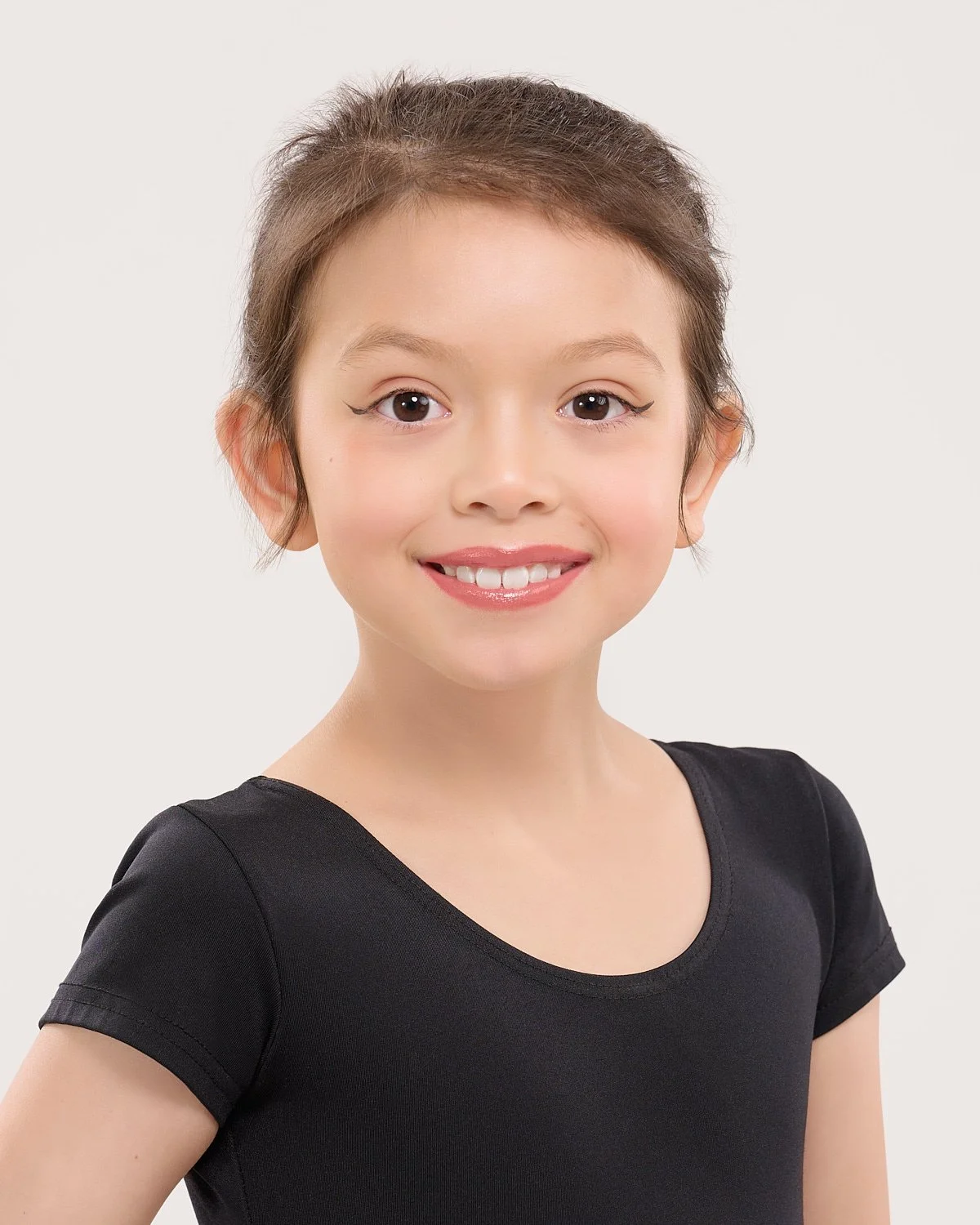
For the headshot, the objective was refined and contemporary: beautifully controlled studio lighting, an elegant black ballet leotard and an expression that communicates both composure and presence. A strong dance headshot needs to do more than document someone's appearance. It should introduce the dancer with clarity and confidence while allowing personality to remain visible.
The second portrait presented a very different challenge.
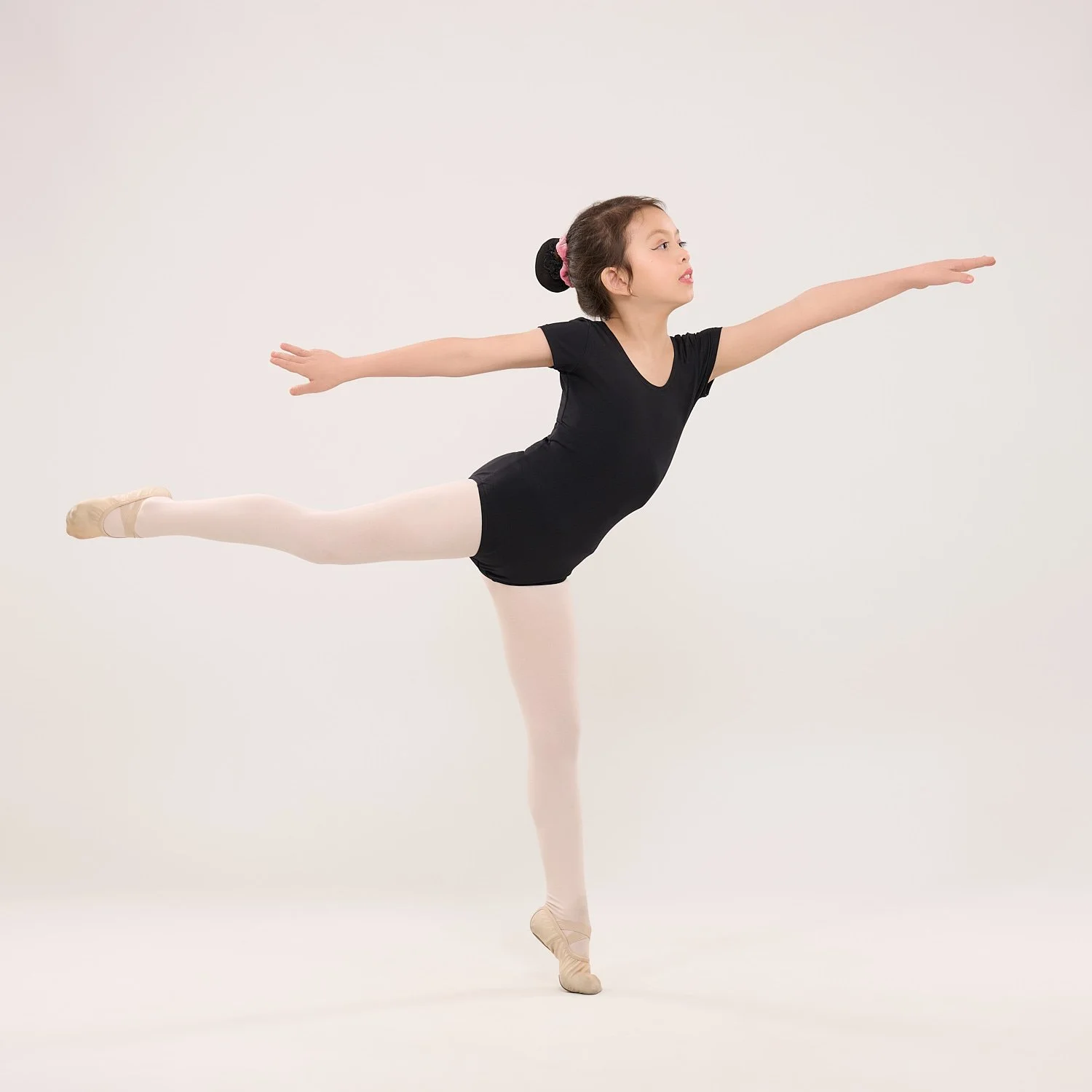
The Arabesque is one of ballet's most recognizable positions, but its apparent simplicity can be deceptive. The beauty of the photograph depends upon the alignment of the entire body—the supporting leg, lifted leg, torso, shoulders, arms, neck and head working together to create one uninterrupted visual line.
Camille approached the pose with the precision expected of a dancer preparing for an audition.
The resulting image has a wonderfully sculptural quality. Against the white background, the black leotard creates a graphic silhouette, allowing the lines of the Arabesque to become the central visual element. The photograph is simultaneously a portrait and a study of movement.
This is where professional dance photography becomes different from simply photographing a dancer.
For an audition portrait, technical accuracy matters.
The photographer has to understand what makes a position read correctly in a two-dimensional image. Lighting has to reveal the form without flattening it. The composition must respect the dancer's line. The camera angle must flatter rather than distort. And the final image needs to retain enough visual simplicity to allow the dancer—not the production—to remain the focus.
That restraint is particularly important for ballet.
Ballet has its own visual language: line, balance, extension, turnout, placement, control and grace. A successful portrait does not need to exaggerate those qualities. It needs to reveal them.
Camille's session was deliberately minimalist for that reason.
A white background.
A black leotard.
Beautifully shaped studio light.
One carefully executed position.
The resulting photographs have a timeless quality that feels appropriate for an audition portfolio while remaining sophisticated enough to stand on their own as fine portraiture.
There is also something compelling about the contrast between the two photographs.
The headshot is about presence.
The Arabesque is about discipline and technique.
Together, they offer a more complete introduction to a dancer: the person behind the performance and the physical vocabulary she has spent years learning to master.
For dancers preparing for auditions, competitions, conservatory applications, company opportunities or other professional submissions, photography can become an important part of the presentation.
The photograph is often the first impression.
It should therefore be polished without becoming artificial, elegant without becoming overly theatrical and technically precise without losing the individuality of the dancer.
At Joy of the Moment Photography, studio dance portraits can be created specifically around those requirements, with professional lighting, careful posing direction and an understanding of how a dancer's body needs to be represented photographically.
Camille's session is a beautiful example of the power of simplicity.
When the background disappears and the lighting becomes intentional, what remains is the essential image: a dancer, her line, her expression and the quiet confidence behind the technique.
And sometimes, that is all a beautiful portrait needs.
Joy of the Moment Photography
The Woodlands, Texas